


Discover LLM-optimised content strategies, structured data, and content clusters to boost visibility across ChatGPT, Perplexity, and Google AI Overviews. Learn how to dominate AI-powered search with Answer Engine Optimisation (AEO).
TL;DR
- Answer Engine Optimisation (AEO) helps brands appear in AI-powered search results.
- Focus on LLM-optimised content, structured data, and content clusters.
- Increases visibility across platforms like ChatGPT, Perplexity, and Google AI Overviews.
- Essential for capturing high-intent queries and AI-generated answer snippets.
Most brands overcomplicate AEO, but the truth is simple: AI will only choose you if your content is the easiest to understand.
AEO is not about stuffing pages with jargon. It is about giving large language models exactly what they need: clean structure, clear intent, and content that an algorithm can trust at a glance.
When you do that, you stop fighting for rankings and start becoming the default answer across platforms like ChatGPT, Perplexity, and Google’s AI Overviews.
In a landscape where AI decides who gets visibility, ignoring AEO is not a small oversight. It is a guaranteed loss.
What is Answer Engine Optimisation (AEO)?
Answer Engine Optimisation (AEO) is a strategy that makes your content AI-friendly, ensuring platforms like ChatGPT, Perplexity, and Google AI Overviews recognise your brand as the preferred answer.
Most teams treat AEO like another SEO trend. It is not. AEO is the process of making your content so clear and well-structured that AI platforms choose it without hesitation.
AEO is the difference between being another result online and becoming the answer that tools like ChatGPT, Perplexity, and Google AI Overviews rely on when users ask real questions.
Traditional SEO focuses on keywords. AEO focuses on how people actually search and how AI interprets intent. Your goal is simple. Become the source the model trusts enough to quote.
To do that, you need content that is genuinely LLM-friendly. Large language models do not read like humans. They scan for structure, coherence, and topic clarity. If your content is segmented cleanly, organised around real questions, and supported by strong content clusters, AI is far more likely to surface it.
Here are the core benefits of AEO:
- Content that AI can interpret instantly.
- Structured data that gives the model context.
- Topic clusters that prove you know your space.
AEO is not about chasing rankings. It is about earning the position of a trusted answer and meeting your audience at the moment they ask the question.
How AI and LLMs Are Changing Search
AI is rewriting the rules of how people find information online. Ignore it at your own risk.
Large Language Models like ChatGPT, Perplexity, and Google AI Overviews no longer care about keywords the way traditional SEO does. They focus on context, relevance, and user intent. If your content doesn’t make sense to them, it won’t get surfaced. Simple as that.
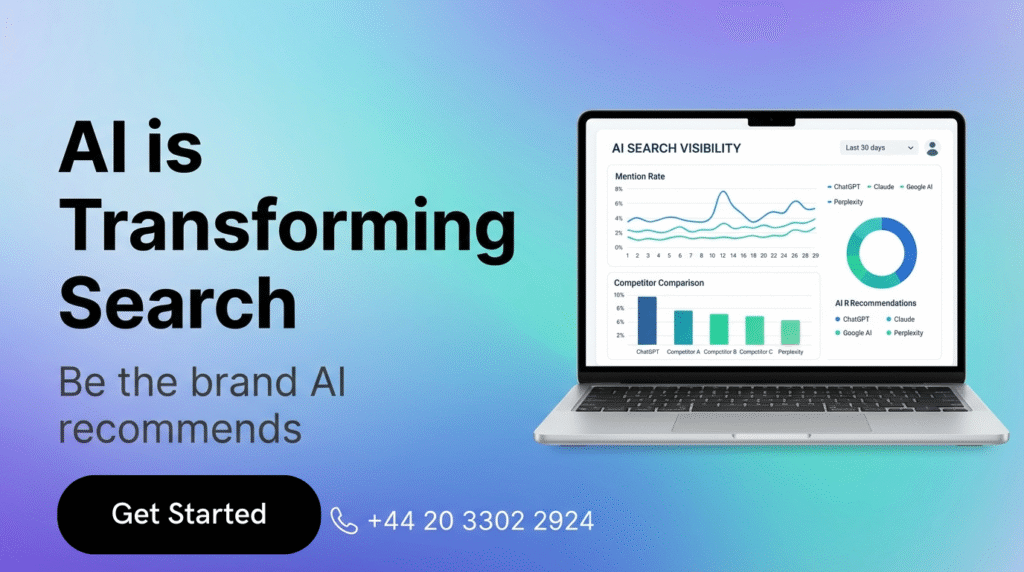
These models evaluate content based on semantic connections, topic clusters, and structured data. They look for clarity, coherence, and authority. Well-organised content isn’t just easier for humans to read; it’s how you get AI to pick you for answer snippets, featured answers, and AI-powered results.
Here’s the opportunity for brands that understand this shift:
- You can target high-intent queries that AI is actively looking to answer.
- You can build visibility across multiple AI platforms at once.
- You can prove your expertise with structured, semantic content that earns trust.
If you ignore how LLMs read and interpret content, you’ll fall behind. Creating content clusters, structuring pages clearly, and providing AI with context isn’t optional anymore; it’s how you stay visible in an AI-driven search landscape.
Building an Effective AEO Content Strategy
Creating a strong Answer Engine Optimisation (AEO) strategy starts with more than just writing content.
In this section, we will cover practical steps to make your content discoverable, authoritative, and relevant for AI-powered search engines such as ChatGPT, Perplexity, and Google AI Overviews.
Identify High-Intent Queries
The first step is to understand the questions your audience is actively asking. High-intent queries indicate strong interest or a readiness to act, and AI is more likely to surface content that answers them directly.
- Research long-tail AI keywords and semantic variations to capture natural language queries.
- Analyse questions already appearing in AI-generated answer snippets in your niche.
- Focus on queries that align with user intent, not just search volume.
Targeting these queries ensures your content aligns with what AI considers relevant, increasing your chances of appearing in answer snippets, featured answers, and conversational AI results.
Structure Pillar Pages and Content Clusters
Organising content strategically is critical for AEO success.
Pillar pages serve as comprehensive hubs for broad topics, while cluster articles dive into related subtopics.
- Use internal linking to connect clusters back to the pillar page.
- Ensure headings reflect semantic relationships between topics.
- Include FAQs, examples, and data points to help AI understand the content.
This structure demonstrates topical authority and improves your cross-LLM visibility, making it easier for AI platforms to recognise your brand as a trusted source.
Create AI-Friendly Content
AI algorithms favour content that is structured, clear, and contextually rich. When writing for AEO, focus on:
- Concise, scannable content that answers questions directly.
- Semantic relevance, covering multiple aspects of a topic.
- Visual aids and structured elements like tables, bullet points, and lists to make information easy for AI to parse.
Writing this way ensures that LLMs understand your content’s purpose, increasing the likelihood of being selected for featured answers or answer snippets.
Leverage Internal Linking and Structured Data
Internal linking reinforces topic authority by showing how your content pieces relate to one another. Structured data and schema markup provide AI with explicit signals about your content type and relevance.
- Implement the FAQ schema to highlight common questions.
- Use structured markup to define key entities, products, or services.
- Organise clusters so AI recognises the pillar page as the authoritative hub.
A well-executed AEO content strategy combines LLM-optimised content, structured data, and semantic content clusters. This ensures your brand consistently appears as the preferred answer across AI-powered search platforms, connecting with your audience and standing out in an AI-driven search landscape.
Technical Optimisation for AI Search
Optimising content for AI-powered search goes beyond writing.
Technical elements such as structured data, schema markup, content organisation, and page performance help AI understand, index, and surface your content accurately.
Implementing these strategies ensures your brand appears in answer snippets, featured answers, and AI-generated search results, giving you an edge across platforms like ChatGPT, Perplexity, and Google AI Overviews.
Use Structured Data and Schema Markup
Structured data provides AI with clear information about your content type and context. By marking up pages with schema, you improve discoverability and make it easier for LLMs to surface your content.
- Implement the FAQ schema to highlight common questions and answers.
- Use Article, HowTo, and Product schema to define the purpose and format of your content.
- Add knowledge graph elements to showcase entities, relationships, and key concepts, helping AI understand your topic authority.
- Example: A recipe page with HowTo schema not only appears in search results but can also be presented as a step-by-step answer by AI engines.
Organise Content for AI Readability
AI evaluates content based on structure, hierarchy, and clarity. Well-organised content increases the likelihood of being recognised as authoritative.
- Use descriptive headings and subheadings to outline key concepts clearly.
- Incorporate bullet points, numbered lists, and tables to make information scannable.
- Maintain logical flow between pillar pages and cluster content, ensuring AI understands topic relationships.
- Include relevant internal links to reinforce semantic connections between topics.
Optimise for Multi-Modal AI Search
Modern AI search engines process text, images, and videos together. Optimising all content types ensures maximum AI visibility.
- Add alt text and descriptive captions to images for context.
- Include video transcripts to make spoken content discoverable by AI.
- Ensure media is relevant and supportive of the topic, reinforcing semantic understanding.
Focus on Page Performance and Accessibility
AI prioritises content that delivers a good user experience. Fast-loading, mobile-friendly, and accessible pages are more likely to rank highly in AI-powered search results.
- Optimise page speed with compressed images, efficient code, and caching strategies.
- Ensure mobile responsiveness so content displays correctly on all devices.
- Implement accessibility best practices, including proper heading structure, alt text, and screen reader compatibility.
Combine Technical Optimisation with Content Strategy
Technical optimisation works best when paired with LLM-optimised content and content clusters. Structured content, clear hierarchy, and performance improvements reinforce your authority and help AI surface your brand consistently.
By applying these technical strategies, your content is not only AI-ready but also positioned to capture answer snippets, featured answers, and conversational AI results, ensuring long-term visibility in the AI-driven search landscape.
Measuring Success in AEO
Tracking the effectiveness of your Answer Engine Optimisation (AEO) efforts is essential. Unlike traditional SEO, AEO focuses on AI visibility, answer snippets, and user engagement, so the metrics you monitor should reflect how AI interacts with your content.
Key Metrics to Track
- Answer Snippet Appearances: Monitor how often your content is featured as an AI-generated answer. Tools like Google Search Console and AI monitoring platforms can help track these.
- Click-Through Rate (CTR): A High CTR from AI-powered search indicates that your content is compelling and relevant to users’ queries.
- Dwell Time and Engagement: Longer dwell time signals to AI that your content is valuable and authoritative.
- Traffic from AI Sources: Analyse referral traffic from AI-powered platforms to understand which content performs best.
- Featured Answer Retention: Track whether your content consistently appears in featured answers over time, which reflects AI trust.
Auditing and Evaluation Techniques
Regular auditing ensures your content remains optimised for evolving AI algorithms:
- Conduct content audits to identify outdated information or low-performing pages.
- Evaluate schema and structured data to ensure AI can accurately interpret your content.
- Use AI content evaluation metrics to check readability, semantic relevance, and topic coverage.
Adjusting Strategy Based on Insights
Data-driven adjustments help maintain and improve AI visibility:
- Optimise underperforming pages by refining content, adding structured data, or updating internal links.
- Expand content clusters around topics with high AI engagement to strengthen authority.
- Experiment with different formats such as FAQs, tables, or visual aids to enhance AI comprehension.
By continuously monitoring performance and making iterative improvements, your brand can maintain authority, capture high-intent queries, and maximise AI search visibility. This ensures your content remains a trusted answer across multiple AI-powered search engines.
FAQs
Why is AEO important for my brand?
How do I create LLM-optimised content?
What are content clusters, and why do they matter?
How do I measure success in AEO?
Can traditional SEO and AEO work together?
Answer Engine Optimisation: Final Thoughts
Answer Engine Optimisation (AEO) is essential in today’s AI-driven search landscape. By using LLM-optimised content, structured data, and content clusters, your brand can increase visibility, capture high-intent queries, and appear as the trusted answer across AI-powered search platforms.
LangSync AI helps brands optimise content for ChatGPT, Perplexity, Google AI Overviews, and other AI platforms. Their team specialises in LLM optimisation, content structuring, and AI search strategies, ensuring your brand is visible wherever customers are searching.
To make your brand the go-to answer in AI search.