


Discover how enterprises optimise for LLM visibility using LLMO best practices, structured data, and monitoring workflows. Learn to make your content AI-citation ready.
TLDR
- Audit your content for entity coverage, trust signals, and AI-friendly readability to increase citation likelihood.
- Structure your content in “chunks” with clear questions and answers so LLMs can easily reference it.
- Track mentions, sentiment, and AI citations across platforms to measure true AI visibility.
- Implement structured data and schema for AI search to boost your discoverability in answer engines.
The age of search is shifting.
AI-generated answers compress discovery into a single response, meaning only a handful of sources shape user perception. If your content is not recognised as a trusted entity, it will be excluded entirely, regardless of rankings or traffic.
Enter LLMO: Large Language Model Optimisation. This approach goes beyond keywords and backlinks, focusing on AI visibility, structured data, and citation-ready content that answer engines trust.
In this guide, we will walk you through why LLMO matters, the anatomy of AI citations, enterprise-ready metrics, and practical steps to make your content citation-ready for AI-driven platforms.
The Shift to AI-Led Discovery
The way people find information is changing fast.
Increasingly, users are relying on AI-driven platforms like ChatGPT, Claude, or Gemini instead of traditional search engines. These systems synthesise information from a small, recurring set of authoritative entities, collapsing dozens of links into a single narrative.
Visibility in AI answers is determined by whether your brand is reused across prompts, not whether it ranks for individual queries. Brands that fail to achieve this reuse are excluded from neutral category answers, even when they dominate traditional search results.
Why it matters now:
- Users are increasingly satisfied with AI-provided summaries instead of clicking through multiple sites.
- AI models prioritise credibility, relevance, and structured knowledge, not just keywords.
- Companies that fail to optimise for AI visibility risk losing influence in their niche.
Key Takeaways:
The rise of AI-driven discovery is changing the rules of content visibility.
Ranking well in search engines is no longer enough; content must be credible and structured for AI models. Businesses that adapt early gain a strategic advantage in reach and influence, while ignoring AI visibility risks becoming invisible in AI-first search experiences.
Why Traditional SEO Metrics Break Down
Traditional SEO metrics like page rank, keyword density, and backlink counts have long been the backbone of content strategy.
AI models do not optimise for popularity signals; they prioritise internal coherence, entity confidence, and cross-source agreement. As a result, high-ranking pages are often summarised without attribution, while smaller but well-defined entities earn direct citations.
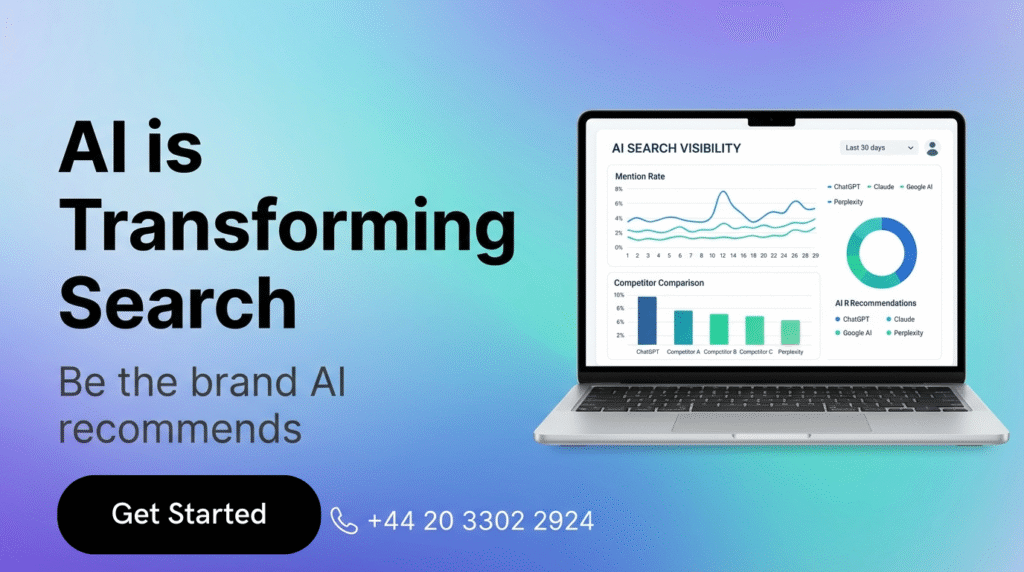
A page with lots of backlinks might still be overlooked if AI does not see it as trustworthy or relevant.
Why it matters now:
- Clicks and impressions no longer guarantee visibility in AI-generated answers.
- AI models judge content quality using signals beyond traditional SEO, including structured data, entity coverage, and trust signals.
- Companies relying only on old metrics risk spending effort on strategies that do not improve AI discoverability.
Key Takeaways:
These systems pay attention to relevance, credibility, and structure instead of just popularity or keywords.
Businesses need to rethink how they measure success and focus on the signals that actually help AI recognise and cite their content.
The Anatomy of AI Visibility
Being visible to AI is more than just having content online.
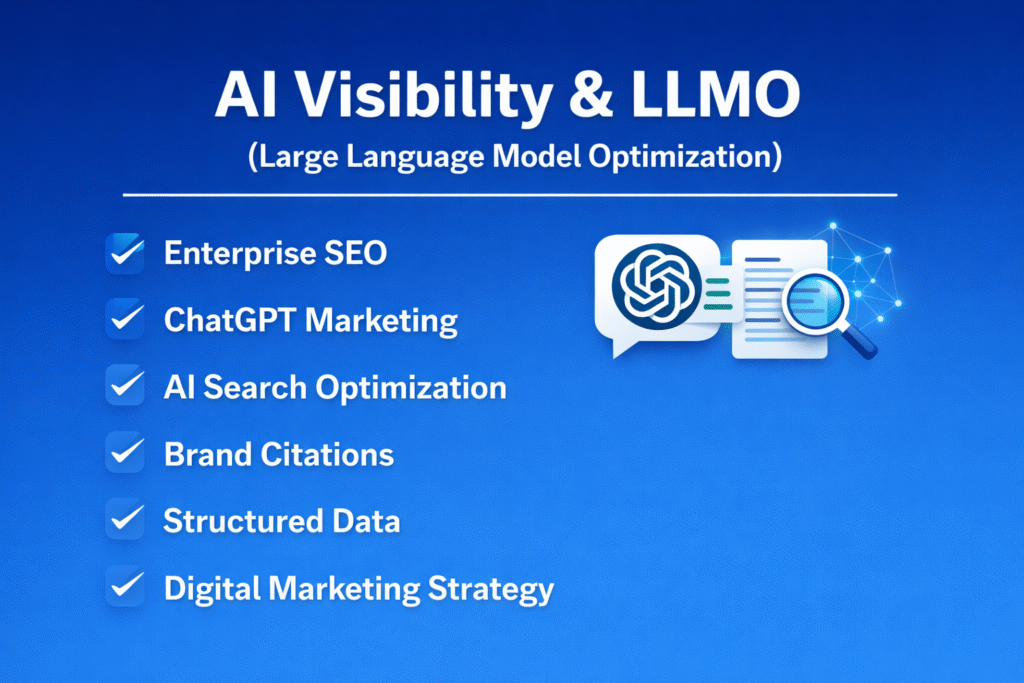
AI models look for several key signals when deciding what to include in an answer. These include mentions of your brand or topic across the web, citations in reputable sources, trust indicators, and even sentiment around your content.
Structured content that clearly organises information helps AI understand and reference your work.
Why it matters now:
- AI visibility is determined by signals that go beyond backlinks and keyword rankings.
- Being cited or mentioned in trusted sources increases the likelihood of appearing in AI responses.
- Positive sentiment and clear, well-structured content improve AI comprehension and confidence in your material.
Key Takeaways:
AI visibility is built on credibility, context, and structure. Simply ranking well in Google is not enough anymore.
To be discoverable, content must be recognised by AI as trustworthy, relevant, and easy to understand. Brands that master these signals can secure a lasting presence in AI-generated answers.
Enterprise-Grade Metrics for LLM Visibility
Measuring AI visibility requires more than just pageviews or clicks.
Companies need metrics that show how often AI models reference their content, how trustworthy those citations are, and how well their content is structured for comprehension.
Examples include the number of AI mentions, citation quality, trust signals, sentiment, and snippet inclusion. Monitoring these indicators lets teams understand where they influence AI answers and where gaps remain.
Why it matters now:
- Tracking mentions and citations shows real-world AI influence.
- Analysing sentiment and trust signals helps identify potential risks in content.
Key Takeaways:
AI visibility is measurable but requires a new set of metrics.
Brands that adopt enterprise-grade tracking can see how often AI cites them, understand the credibility of those citations, and adjust content to maximise discoverability.
Without these metrics, businesses risk flying blind in AI-driven discovery.
How LLMO Monitoring Works (with examples)
Monitoring how your content performs in AI-driven search is crucial. It is not enough to publish content and hope for the best.
Tools like rank.langsync.ai allow you to track which pieces of content are being cited by AI models like ChatGPT, Claude, or Gemini. By analysing mentions, citations, and trust signals, you can see what works and where gaps exist.
Why it matters now:
- AI platforms can change how they surface information quickly, so ongoing monitoring is essential.
- Understanding which content is cited helps prioritise optimisation efforts.
- Monitoring tools give you concrete data to demonstrate the AI visibility impact on stakeholders.
Key Takeaways:
Using a monitoring tool like rank.langsync.ai makes AI visibility measurable and actionable.
By tracking citations, mentions, and content performance, teams can continuously refine content, improve trust signals, and ensure their work is recognised and cited by AI platforms.
Operational Playbook
Turning AI visibility into action is all about structure, strategy, and the right tools.
Simply creating great content isn’t enough anymore. You need to design it so that AI models recognise it as credible, relevant, and easy to reference.
Key steps include clearly marking up content with structured data, aligning your content with likely AI queries, and monitoring performance using tools like rank.langsync.ai, which shows how often your content gets cited and identifies opportunities to improve.
Here’s how it works in practice:
- Audit and map content: Start by identifying which existing content is already getting AI citations and where gaps exist. Use this insight to prioritise which topics to optimise. For example, one e-commerce blog increased AI citations by 25% after reorganising product FAQs with structured data.
- Optimise content structure: Break content into concise, clear sections with descriptive headings and answer-oriented paragraphs. A SaaS company restructured its “how-to” guides, and rank.langsync.ai flagged a jump in citations by ChatGPT and Gemini within weeks.
- Monitor and iterate: AI visibility is not static. Continuously track which pages are getting cited, which questions your audience is asking, and adapt. Another B2B site added entity-level markup for its case studies, and within two weeks, their examples were being referenced in AI-generated summaries even though they didn’t rank high on Google.
By following this operational playbook, you move beyond guessing and into a data-driven approach, proving that AI discoverability can be systematically achieved and measured.
Mistakes to Avoid
When optimising content for AI visibility, some common missteps can quietly derail your efforts:
- Treating AI like traditional SEO: Focusing only on keywords, backlinks, or page rank without considering how AI models assess relevance, trust, and structure can make your content invisible.
- Neglecting structured content and context: AI models rely on organised knowledge, semantic connections, and credible sources. Even factually correct content may be ignored if it’s poorly structured.
- Failing to monitor AI signals continuously: AI citations can fluctuate with model updates or training data changes. Tools like rank.langsync.ai help track visibility shifts so you can act quickly.
- Overloading content with self-promotion: AI models favour neutral, informative, and authoritative content. Push value first, introduce offerings naturally, and avoid overtly salesy language.
The key takeaway is that AI visibility demands a blend of structured content, credibility, and ongoing monitoring. Skipping any of these elements can prevent your content from being cited or trusted.
Bad AI Visibility: Real Patterns Enterprises Should Watch For
1. Your Brand Doesn’t Appear at All
AI answer engines may respond confidently while excluding your brand entirely, even when you dominate the category.
This typically occurs when:
- Entity data is weak, ambiguous, or inconsistent across platforms
- Competitors hold stronger, structured knowledge signalsThe
- Topical authority is unclear or fragmented across your content ecosystem
- Authoritative external sources do not reference or reinforce your positioning
Enterprise implication: absence signals low entity strength, making you invisible in decision-shaping AI answers.
2. Your Brand Is Mentioned Incorrectly
AI may describe your products, features, or positioning inaccurately, in outdated terms, or in overly generic language.
Triggers include:
- outdated or stale content
- conflicting descriptions across websites, datasheets, and third-party platforms
- incomplete product documentation or unclear feature naming conventions
- insufficient reinforcement from trusted external sources
Enterprise implication: inaccurate summaries distort your value proposition and weaken category fit.
3. Competitors Displace You in Neutral Queries
For broad discovery queries like “best B2B analytics platforms,” AI may consistently highlight competitors and omit you.
This often stems from:
- Richer or more coherent competitor entity graphs
- Stronger presence across authoritative sources (analyst reports, reviews, case studies)
- Clearer topical relevance signals for category-defining queries
- Higher consistency in competitor brand narratives across platforms
Enterprise implication: competitor displacement reshapes buyer perception before they reach your website.
4. AI Uses Negative or Misleading Sentiment
Your brand appears, but the context undermines trust.
Examples include:
- Outdated negative reviews being treated as current
- Legacy issues resurfacing in AI summaries
- Phrasing that portrays your product as limited, unreliable, or less innovative
- Associations with the wrong customer segments or use cases
Enterprise implication: negative sentiment amplifies risk perception for enterprise buyers.
5. Your Brand Is Visible but Not Credible
AI includes your brand name but fails to reinforce the mention with citations or authoritative evidence.
This happens when:
- Your site lacks structured data and machine-readable references
- Credible external sources don’t cite you directly
- Your brand is known but not trusted algorithmically
- Entity-level confidence is low
Enterprise implication: You are named but not recommended, which signals insufficient trustworthiness.
FAQs
What is LLMO, and why does it matter?
How do I measure AI visibility?
What types of content are most likely to be cited by AI?
Are there common mistakes to avoid in LLMO?
How can rank.langsync.ai help my business?
LLMO & AI Visibility: Final Takeaway
AI-led discovery is changing how people find and trust information.
Your content needs to be structured, authoritative, and easily citable by AI models to remain relevant.
Tracking mentions, citations, sentiment, and trust signals is essential. LangSync AI, through its agency services and the rank.langsync.ai tool, helps businesses monitor AI visibility, optimise content for LLMs, and understand which pieces are being cited and referenced by leading AI models.
Businesses that embrace AI visibility early can maintain thought leadership, influence their industry, and build trust with both human and AI audiences.
Explore how LangSync AI and rank.langsync.ai support teams with visibility monitoring.